
4-ingredient biscoff lava mug cake brings warm cookie-butter cake and a glossy molten center to one ramekin in about three minutes. Four pantry ingredients make the base, with crunchy cookie crumbs and a drizzle offered as optional extras.
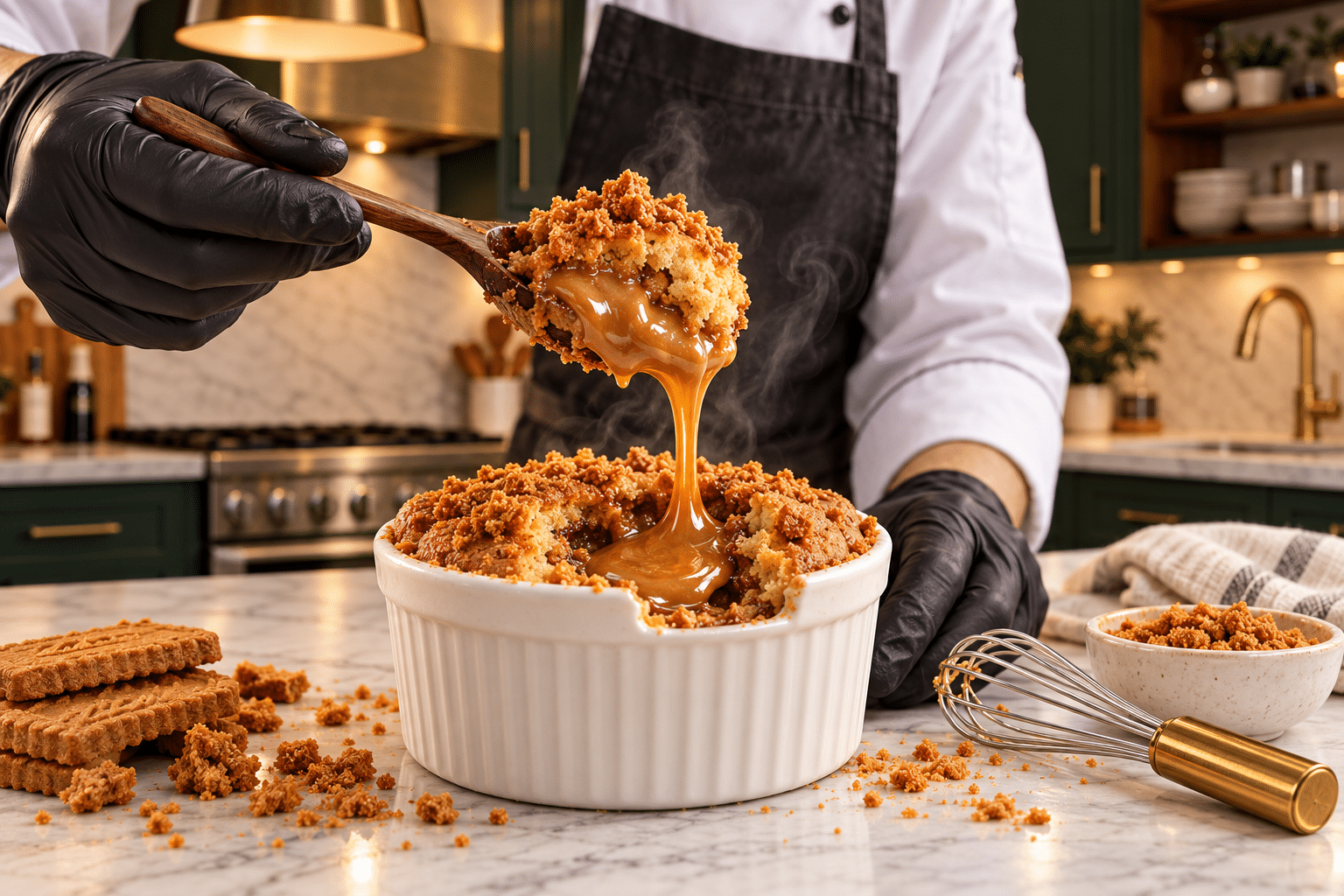
The Culinary Science: Why This 4-Ingredient Biscoff Lava Mug Cake Works
Cookie butter already combines ground cookies, sugar, and fat. Its oils supply richness and tenderness, while its sugar sweetens the batter, so this small cake needs no additional butter or egg. That does not mean cookie butter performs every function of an egg: flour supplies much of the structure, and baking powder supplies lift. Expect a soft, close crumb rather than an airy sponge.
The chilled filling creates a temperature difference, not a magic liquid barrier. A cold spoonful starts firmer and is easier to position without immediately blending into the batter. During cooking it warms and loosens while the surrounding batter sets. Microwaves heat unevenly and can heat the filling directly, so a cold center cannot guarantee success in exactly 50 seconds. Keep the filling distinct and judge the surrounding cake.
Milk disperses the cookie butter and hydrates the flour; stirring helps distribute fat through the mixture. As it heats, hydrated starch thickens and sets the crumb. This is more accurately starch gelatinization within a mixed fat-and-water batter than an “emulsion of starch and milk.” The lava should be melted cookie butter, never uncooked flour batter.
Ingredients & Smart Substitutions
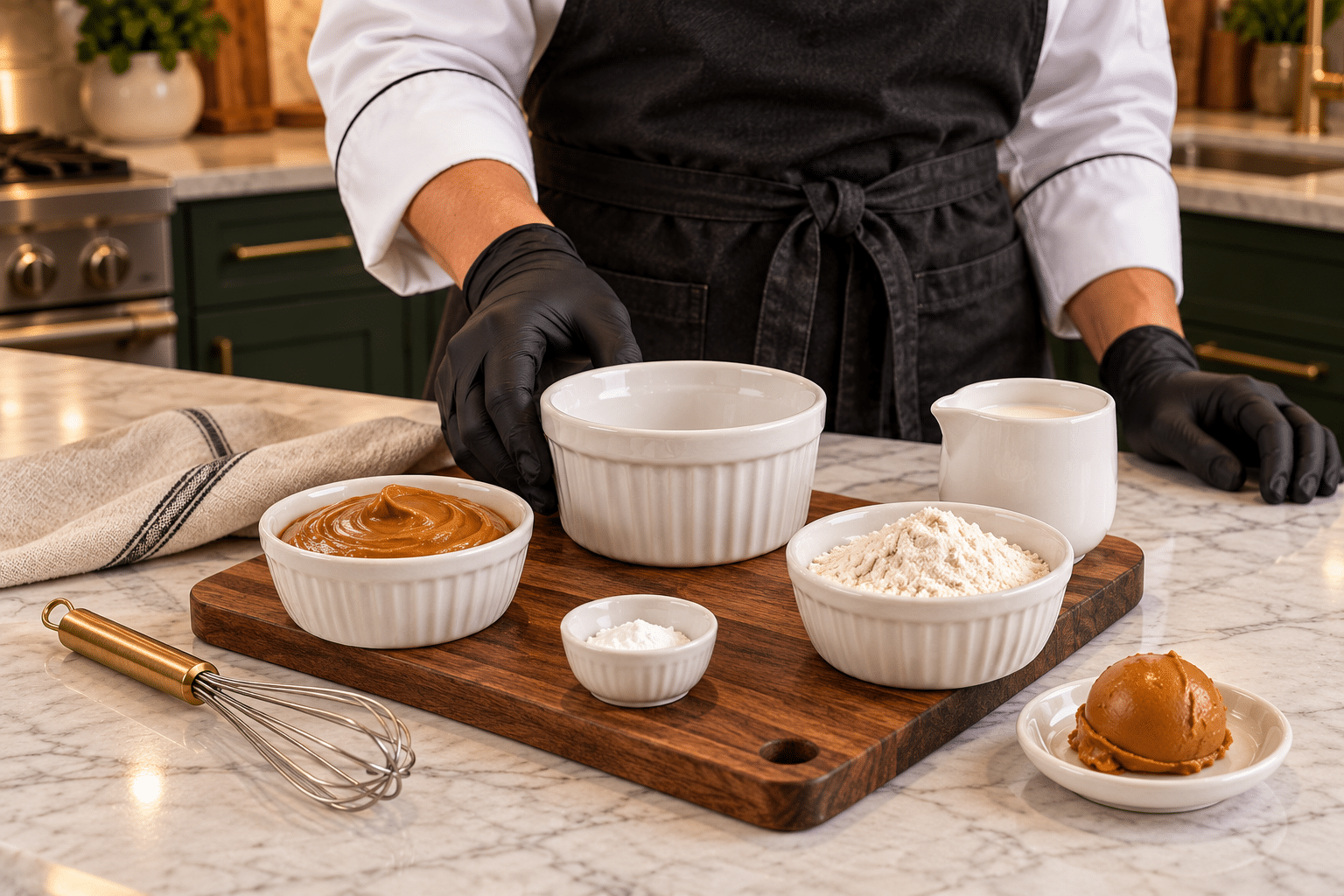
Measure 1/4 cup (65g) Lotus Biscoff cookie butter spread, divided into 2 tablespoons for the batter and 2 tablespoons chilled for the molten core. Add 3 tablespoons (45ml) room-temperature whole milk or almond milk, 3 tablespoons (25g) all-purpose flour, and 1/4 teaspoon baking powder. Optional garnish: one crushed Biscoff cookie and one teaspoon melted Biscoff drizzle, measured separately from the base ingredients.
Use the gram weights when precision matters. The requested 65g total is approximate: the US manufacturer lists 30g per two tablespoons, so four tablespoons by volume may weigh closer to 60g. Spoon flour lightly into the measure and level it; packed flour can leave this little cake dry. Whole milk tastes richer, while unsweetened almond milk keeps the flavor less sweet.
For a 3-ingredient biscoff mug cake, self-rising flour can combine flour and leavening into one purchase. It is not a precisely equivalent substitution because its leavening and salt vary. A flourless “2-ingredient version” made from spread and milk is a warm cookie-butter dessert, not a reliable risen cake; removing flour also removes the main structure. Do not promise the same lava-cake result.
Air Fryer / Oven: 350°F for 8 minutes is a starting checkpoint for an oven-safe ramekin, not a tested equivalent to this microwave method. Preheat first, allow additional time if the surrounding batter remains wet, and check frequently. Vessel size and appliance airflow change the result. Never put a ramekin in an oven solely because it is labeled microwave-safe.
How to Make a Molten Biscoff Lava Mug Cake (Step-by-Step)
1. Prepare the filling and vessel
Have the reserved two tablespoons of chilled spread ready before mixing. Refrigerated spread is sufficient for easier handling; a briefly frozen portion may be firmer, but freezing time is extra and is not included in the three-minute estimate. Choose a wide, microwave-safe ceramic mug or ramekin of about 12 ounces, with enough headroom for expansion. Avoid metallic trim.
2. Stir the batter just until smooth
Soften the batter portion of Biscoff only enough to stir easily. Mix it with the room-temperature milk, then add flour and baking powder. Whisk briefly, scraping the bottom and sides until no dry pockets remain. Stop once the mixture is smooth. A tiny whisk works well, but a fork can reach the corners of a smaller mug.
3. Add the core and microwave
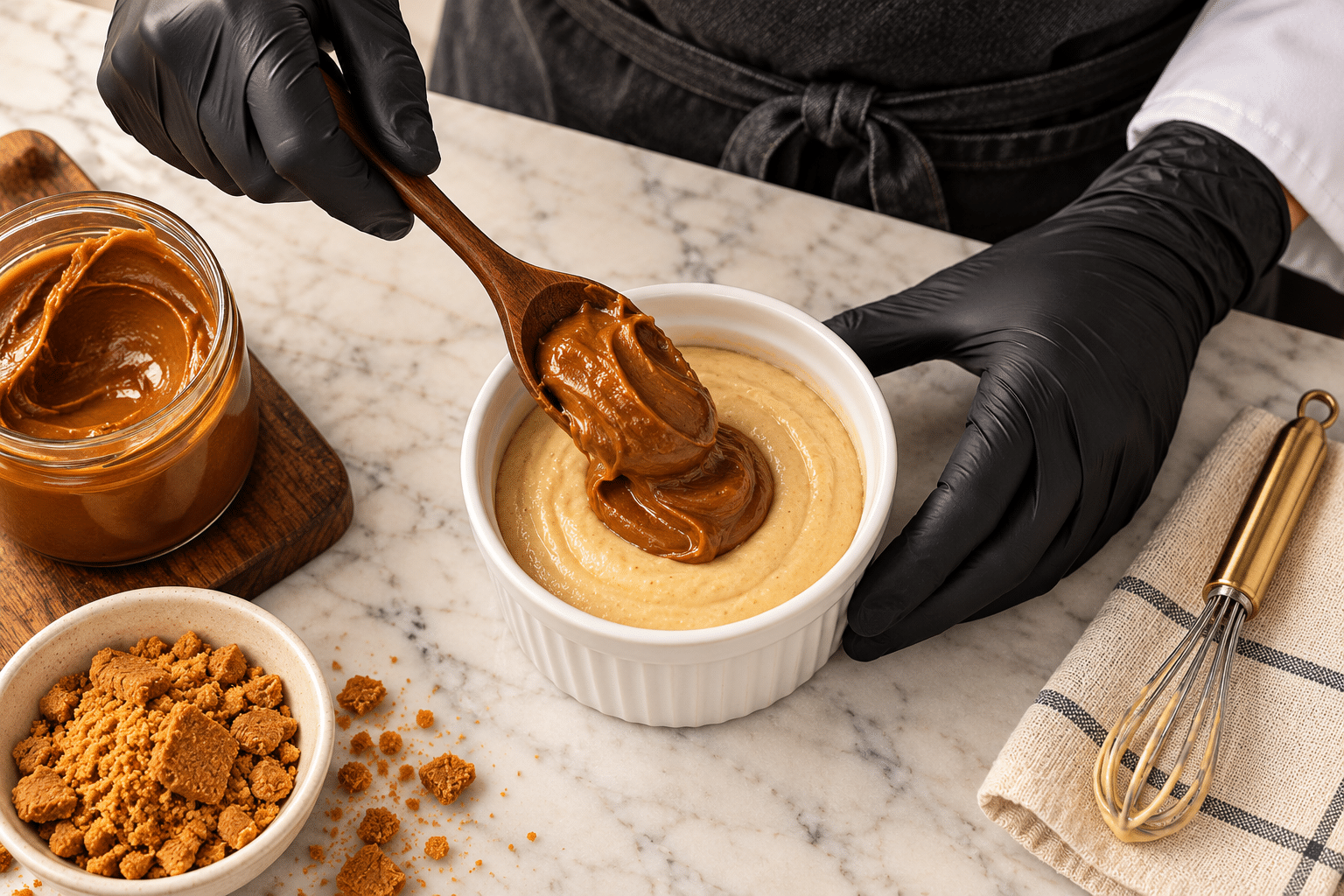
Place the chilled filling in the middle, push it slightly below the surface, and draw a little batter over it. Microwave one portion on high at 900W, checking after 50 seconds and continuing toward 60 seconds as needed. This 1-minute molten biscoff lava cake timing is a starting range, not a guarantee. If cake batter outside the filling is still wet, continue in five-second increments until set.
4. Rest briefly and finish
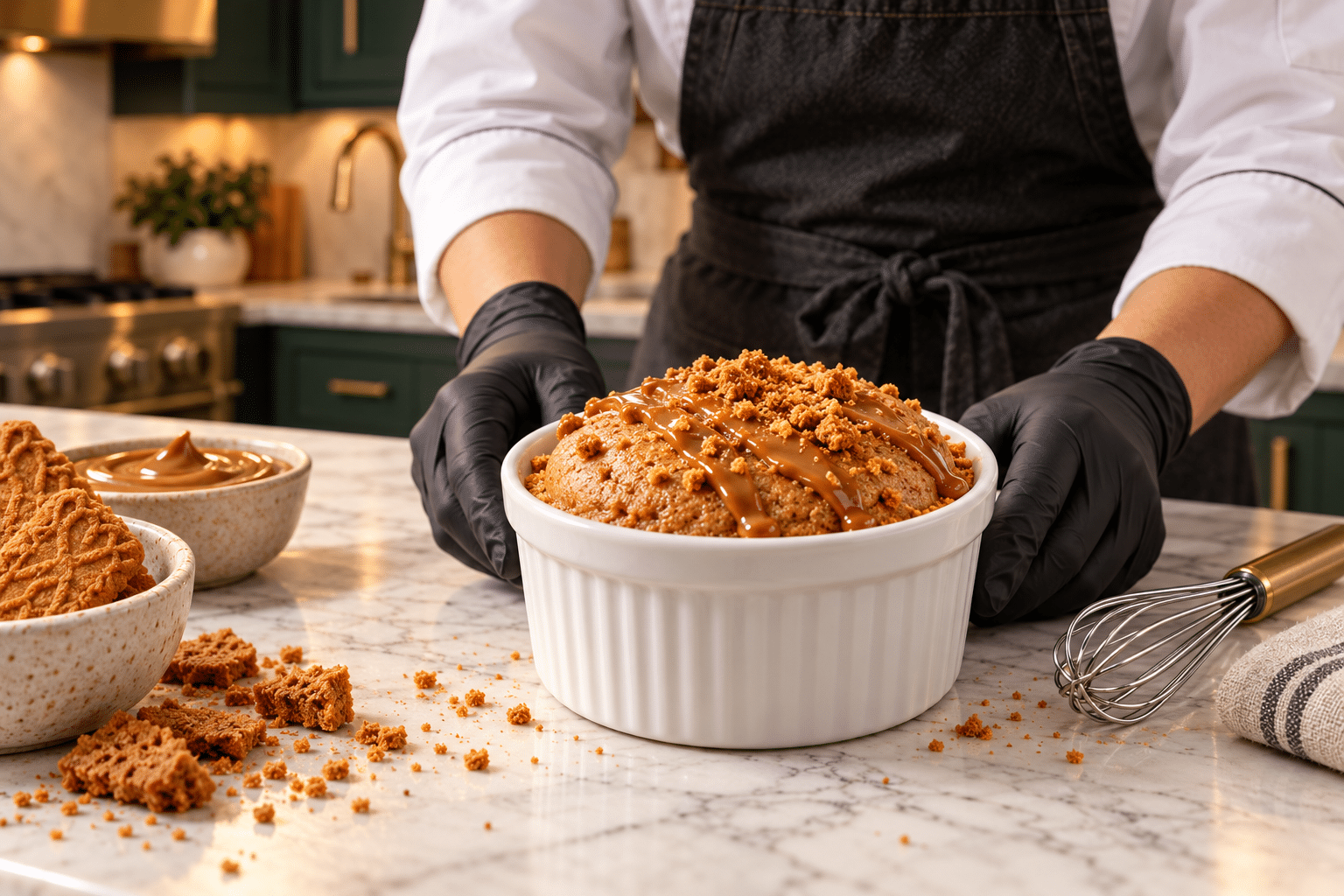
Let the cake stand briefly so the vessel is manageable and the crumb can settle. This cooling time is additional to the nominal three-minute preparation-and-cooking total. Add the optional crushed cookie and warm drizzle, then open the center with a spoon. Look for cooked cake surrounding a separate glossy pool of spread. Microwave cake stays caramel-tan; it does not develop an oven-browned crust.
Chef Pro Tips so You Never Overcook the Lava Center
Start with the same vessel each time. A narrow, thick mug and a wide ramekin can cook differently even at identical wattage. Check your microwave label, and begin earlier if your appliance is more powerful than 900W. Lower-powered models may need longer. Use the visual state of the surrounding cake rather than forcing a fixed timer result.
Keep the core together instead of stirring it through the batter. Measure baking powder carefully, leave expansion space, and cook only one portion at a time. The title describes the intended result; no technique can guarantee it across every appliance. A little extra cooking can dry the crumb, but preserving lava is never a reason to eat raw batter.
Enjoy this lotus biscoff microwave mug cake warm, when the filling flows most easily. For advance preparation, portion the dry ingredients and refrigerate the filling separately, then mix just before cooking. Reheating a finished cake can tighten the crumb, so make a fresh serving when possible. Optional toppings are best added at the end for crunch and a clean glossy finish.
Frequently Asked Questions (FAQs)
How do I make a 3-ingredient or 2-ingredient Biscoff mug cake?
The three-ingredient approach uses cookie butter, milk, and self-rising flour, with the flour supplying its own leavener. Results depend on that flour’s formulation. Spread and milk alone make a two-ingredient warm sauce-like dessert rather than this structured cake. For a defined molten pocket surrounded by cooked crumb, keep the four-ingredient recipe.
Why is my mug cake rubbery?
Overcooking, excess flour, and unnecessary mixing can make the crumb tough. Level the flour, mix only until smooth, and check early. Remember that hot cake continues to settle after heating. If your first attempt is dry, shorten the next cook slightly while still ensuring the batter outside the Biscoff core is fully cooked.
Is this Biscoff mug cake egg-free and vegan?
This is a biscoff mug cake no egg recipe. The manufacturer’s US cookie butter is vegan-friendly; use almond milk or another suitable plant milk for a vegan version, and check all ingredient labels. Whole milk makes it non-vegan. Cookie butter contains wheat and soy, and almond milk adds a tree-nut consideration. Egg-free does not mean allergy-safe for everyone.
Can I bake this in the oven or air fryer instead of the microwave?
You can trial an oven-safe ramekin at 350°F, checking at eight minutes, but this variation has not been kitchen-tested here. Preheating and extra baking extend the total time. Cook until the surrounding batter is set, allowing more time if needed. The filling may spread or the exterior may firm more than in the microwave version.
Recipe development note: this formula and appliance timings have not been kitchen-tested by Hightasty. The requested 380 kcal is a provisional editorial value, not a calculated nutrition result; the listed quantities may produce a higher total, particularly with whole milk and garnish. Recalculate before public publication. Nutrition excludes optional toppings unless separately calculated.
4-Ingredient Biscoff Lava Mug Cake (1-Minute Molten Center)
Equipment
- 12-ounce microwave-safe white ceramic ramekin
- 900W microwave
- Small whisk
- spoon
Ingredients
- 1/4 cup Lotus Biscoff cookie butter spread 65g; divided: 2 tbsp for batter + 2 tbsp chilled for the molten lava core
- 3 tbsp whole milk or almond milk 45ml; room temperature
- 3 tbsp all-purpose flour 25g
- 1/4 tsp baking powder
- 1 Biscoff cookie optional garnish; crushed
- 1 tsp melted Biscoff drizzle optional garnish; additional to the base spread
Instructions
- Reserve 2 tbsp chilled Biscoff for the filling. Choose a wide 12-ounce microwave-safe ramekin without metallic trim.
- Combine remaining 2 tbsp softened Biscoff and milk. Add flour and baking powder; mix briefly until smooth with no dry flour pockets.
- Place the chilled 2 tbsp Biscoff dollop centrally, press slightly below the surface and cover lightly with batter.
- Microwave one serving at 900W. Check after 50 seconds, continuing toward 60 seconds as needed. If surrounding cake batter remains wet, continue in 5-second increments until set. The molten core must be pure spread, not uncooked batter.
- Let stand briefly until manageable; cooling is extra to the nominal total. Add optional crushed cookie and drizzle. Serve warm with a spoon.